
Quick answer: Buy a new IBC when you need clean, documented, first-use storage or a UN-rated tank for transporting dangerous goods. Buy a used or reconditioned one for rainwater, irrigation, waste water and general storage, where it can cost around half the price. Never use a tank for food or drinking water unless its history is documented as food grade. Always check the label, the valve and the cage.
What is an IBC tank?
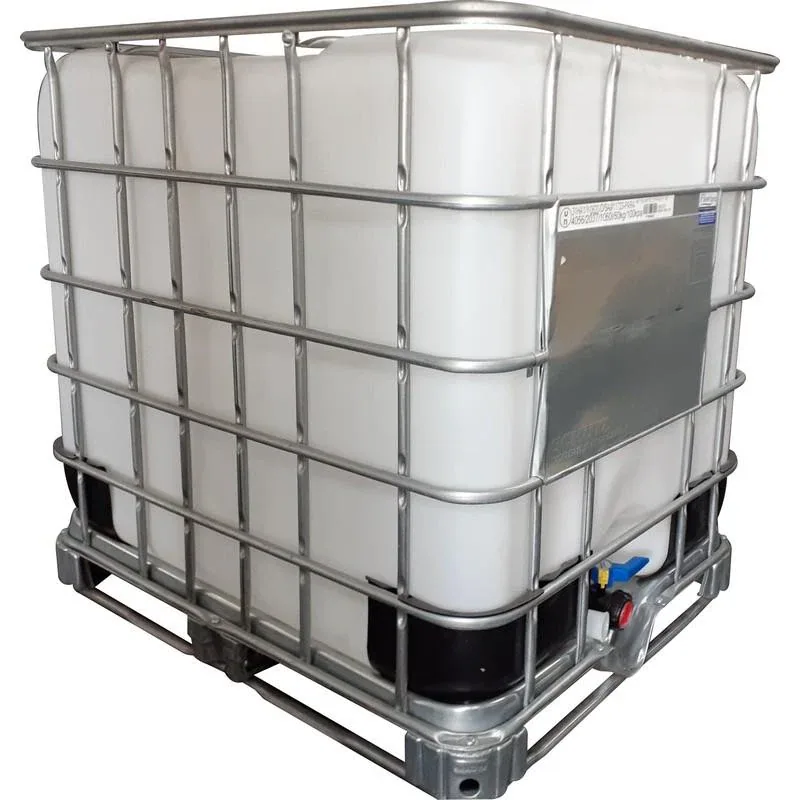
IBC stands for intermediate bulk container. The standard version is a 1,000 litre plastic bottle made of high-density polyethylene, held inside a galvanised steel cage on a pallet base, with a bottom valve and a top fill opening. Smaller versions of 600 litres also exist.
They are popular in South Africa because they are cheap per litre, stackable when empty, and easy to move with a forklift or a tractor loader. Farmers, mines, contractors and households use them for water, feed additives, fertiliser and more.
New, reconditioned or used: what is the difference?
Dealers use different words, so ask what each term means. Common definitions from buyer guides are:
- New: never used, with manufacturer markings and documents. This is the only option for some regulated uses.
- Reconditioned: previously used, then cleaned, inspected and refurbished. Better grades are leak tested and may get new valves, lids or gaskets. UK reseller Kingfisher Direct describes Grade A as close to new, and Grade B as more worn and not leak tested.
- Rebottled: the cage is reused with a new food-grade HDPE bottle inside.
- Used or unrinsed: as collected, with limited cleaning. Container Exchanger, a US marketplace, says these are only for waste or non-consumable construction liquids.
| Condition | Typical use | Cost level |
|---|---|---|
| New food grade | Drinking water, food, first-use storage | Highest |
| New chemical grade | Chemicals, regulated uses | High |
| Reconditioned | Rainwater, irrigation, general liquids | Low |
| Used | Waste water, non-critical storage | Lowest |
Food grade or chemical grade: which do I need?
Grade is about what the IBC held before, not how it looks. ABC IBC’s buying guide explains it this way: food grade means it held only food-contact substances such as vegetable oil or vinegar, and should come with documents tracing the supply chain; chemical grade held non-food products like detergents or solvents; industrial grade is the cheapest and may have undocumented past contents.
The practical advice is simple. Plastic can absorb what it held, and washing may not remove it. Container Exchanger warns that a cleaned tote that kept its original bottle is not food safe, because contents can soak into the plastic. So:
- Drinking water or food: food grade with proof of history, or a new tank.
- Rainwater for the garden and irrigation: reconditioned or used is fine.
- Livestock water: prefer food grade, since previous chemicals can leach.
- Chemicals: use a tank suited to the chemical, and check compatibility before filling.
What does UN-approved mean on an IBC?
A UN marking plate shows that the IBC was tested as a packaging for dangerous goods. It lists specification data and the manufacture date. According to ABC IBC, the plate also helps you find the previous contents, and the date determines when the certification expires. Container Exchanger notes that once certification expires, a used IBC can no longer be used for dangerous goods work.
For storing water on your own property you do not need UN approval. If you ship hazardous liquids, you do. Kamano lists a new 1000 L UN-approved chemical grade IBC (NC255) in its product title; read the product page and confirm details with us before relying on it for transport.
What can I use a used IBC tank for?
The best uses are the ones where the previous contents do not matter. In South Africa that usually means rainwater collection from a roof, farm irrigation, holding borehole water before it goes through a pump, mixing and storing fertiliser solutions, and temporary waste water or site water on construction projects.
Place the tank on a level, compacted base that can carry about a tonne for every 1,000 litres of liquid. Keep it out of direct sun if you can, since light speeds up algae and weakens plastic over time. Container Exchanger puts the life of an IBC at roughly 5 to 20 years depending on use, storage and maintenance, and notes the steel cage often outlasts the plastic bottle, so plan on replacing the bottle first.
How do I inspect an IBC before buying?
- Ask what it held. If the seller will not say, walk away.
- Look at the bottle for brown or tawny staining, cracks or bulges.
- Check the bottom valve and cap: cracked or worn valves are a common failure point.
- Check the cage for dents and rust, and confirm the cage and bottle serial numbers match.
- Read the label for volume, date and specific gravity.
- Smell the inside. A strong chemical smell is a warning sign.
Worked example: five IBCs for a vegetable farm in Limpopo
A small farm wants five 1000 L tanks to store 5,000 L of rainwater and borehole water for irrigation. Water is for crops only, not for people.
Five used food-grade IBCs at R1,748 each come to R8,741. Five new food-grade IBCs at R3,862 each come to R19,310. That is a saving of about R10,568, roughly 55% less, in line with the 30 to 60% cheaper range Container Exchanger quotes for used tanks. The farmer spends part of the saving on new bottom valves and a few fittings and still comes out well ahead. If the tanks stand in sun, an opaque or painted cover helps limit algae growth.
How much does an IBC tank cost in 2026?
Kamano prices, VAT included:
Browse the full IBC tank range. If you plan to store chemicals or fuel, put the IBC on a containment pallet: see the spill containment range, such as the single IBC spill pallet bund, 1260 L sump (R13,703), and read our upcoming guide to spill containment and bunding. For water projects, see the water tanks too.
How are IBCs delivered?
Kamano delivers by its own trucks to all 9 provinces in 1 to 3 business days. Fees by order weight, VAT included, are R550 up to 30 kg, R950 up to 60 kg and R1,450 up to 100 kg. Over 100 kg is quoted, and an IBC with a steel cage and pallet is a heavy item, so ask for a quote. Orders of R20,000 or more get free delivery with coupon code KH027, which does not work below that amount. See the Polokwane delivery page as an example and use the quote form for bulk orders. Payment is by EFT.
Buying from outside South Africa?
Kamano’s standard delivery covers South Africa only. Buyers in Botswana, Zimbabwe, Namibia, Mozambique, Eswatini and Lesotho should contact Kamano before ordering to discuss cross-border options. Phone or WhatsApp +27 73 679 0837, or email sales@kamanoindustrial.co.za.
Sources
- Container Exchanger: new vs used IBC totes
- ABC IBC: buyer’s resource
- Kingfisher Direct: grade A and grade B reconditioned IBCs
Frequently asked questions
Is a used IBC tank safe for drinking water?
Only if it is documented food grade, meaning it held food-contact products only. Washing does not reliably remove chemicals absorbed by the plastic. For drinking water, buy a new food-grade IBC or one with a proven history. Used chemical-grade tanks suit irrigation and waste water instead.
What does UN-approved mean for an IBC tank?
A UN marking plate shows the IBC was tested as packaging for dangerous goods and records its specification and manufacture date. You need it to transport hazardous liquids. For storing water at home or on a farm, UN approval is not needed.
How much cheaper is a used IBC than a new one?
At Kamano, a used 1000 L food-grade IBC is R1,748 against R3,862 for a new food-grade IBC, roughly 55% less. A US marketplace quotes used IBCs at 30 to 60% cheaper than new. Prices change, so check the product pages.
How do I check an IBC before buying it?
Ask what it held, then inspect the bottle for staining, cracks and bulges, the valve for wear, and the cage for dents and rust. Check that cage and bottle serial numbers match and read the label for date and volume. Walk away if the seller will not answer.