
Quick answer: A bund is a leak-proof wall or tray around a container that catches spilled liquid. The usual South African guideline, which industry sources link to SANS 10089, is that it must hold at least 110% of the largest container inside it. A 1,000 L IBC therefore needs 1,100 L of containment. Under NEMA, anyone who spills pollutants must also prevent, report and clean up the damage.
What is bunding and why does it matter?
Bunding is secondary containment. If a drum splits, a hose pops off or a tank is overfilled, the liquid lands in the bund and not on your soil, in your stormwater drain or in the neighbour’s borehole.
It matters most for diesel, oils, fertiliser solutions, pesticides, cleaning chemicals and anything else you would not want in a river. A single leaking drum is cheap to catch and very expensive to clean up afterwards.
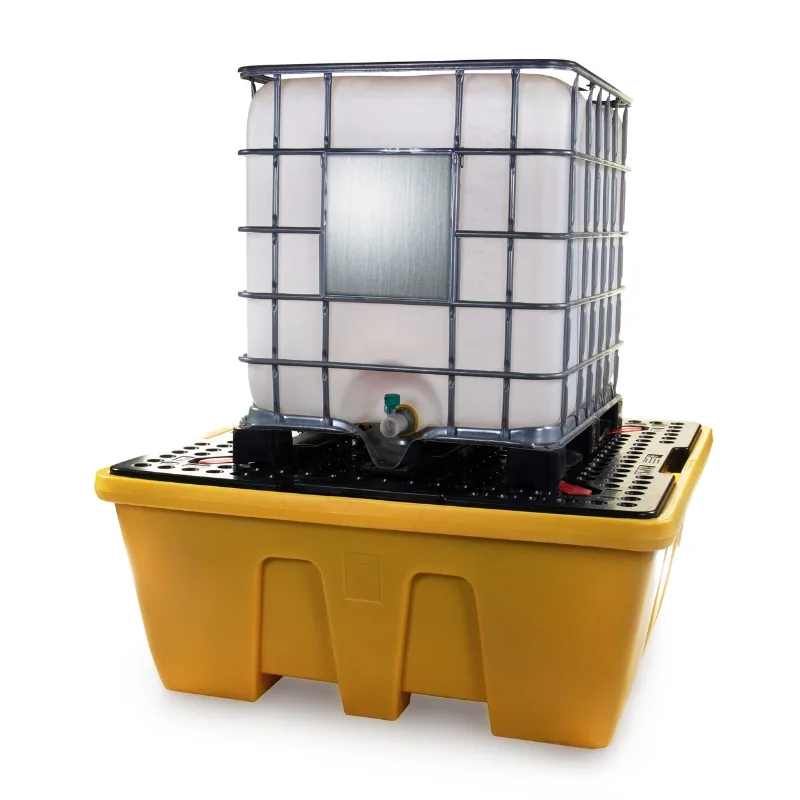
Bunds come in three common forms: a concrete or brick wall built around a large tank, a plastic or steel bund tank that sits under or around a smaller one, and a spill pallet that holds drums or IBCs on a sump.
What is the 110% rule?
The rule says containment volume must be at least 110% of the largest single container in the bund. It is not 110% of everything added together. The extra 10% allows for the displacement of the container itself, a little rainwater and splashing during a failure.
A UK reference on spill pallets gives a clear example of the principle: four 200 L drums on one pallet need 220 L of sump, because only the biggest drum is assumed to fail at one time. The same maths applies here.
For above-ground fuel tanks, a South African insurance-risk article on SANS 10089-1 also says the bund must hold at least 110% of the largest tank, plus an allowance for firefighting foam and water, and that walls and floor must be impermeable. Treat the 110% figure as your minimum, not your target.
Is the 110% rule a South African law?
Be careful here. The figure is widely quoted from SANS 10089, but the standard itself is a paid document and applies through municipal fire and flammable-liquid by-laws and your permit conditions. Requirements differ between municipalities and depend on how much fuel you store. Phone your local fire department before you build, and ask what they will inspect.
How big must the bund be for common containers?
Work out the largest container, add 10%, then choose containment that is equal to or bigger than that number. The table shows common cases and the Kamano products that cover them.
| What you store | Largest container | Minimum containment (110%) | Kamano option |
|---|---|---|---|
| Up to four 210 L drums | 210 L | 231 L | In-line 4-drum spill pallet, 235 L sump |
| One 1,000 L IBC | 1,000 L | 1,100 L | Single IBC spill pallet, 1,260 L sump |
| Two 1,000 L IBCs | 1,000 L | 1,100 L | Double IBC spill pallet, 1,130 L sump |
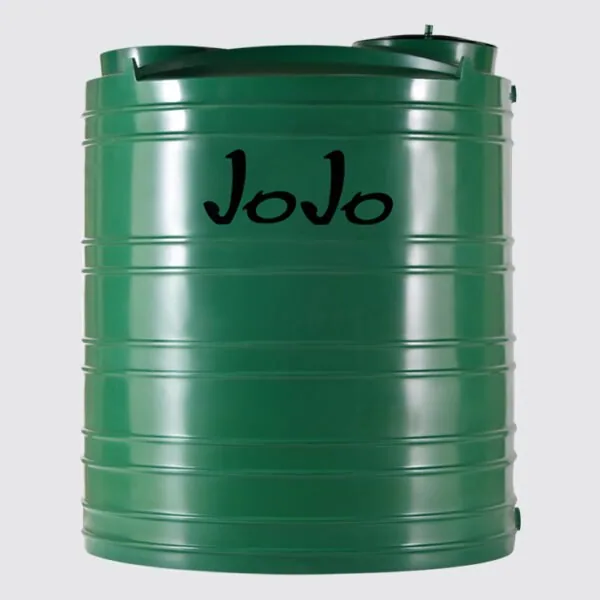
| One 1,500 L diesel tank | 1,500 L | 1,650 L | 2,520 L bund tank |
| One 5,000 L diesel tank | 5,000 L | 5,500 L | 10,000 L bund tank (a 5,000 L one is too small) |
| One 10,000 L diesel tank | 10,000 L | 11,000 L | Above our listed bund tanks, so a built concrete bund or a quote |
Notice the 5,000 L row. A bund tank sold as 5,000 L holds exactly the tank volume, not 110% of it. For a 5,000 L diesel tank you step up to the next size.
Which bund suits drums, IBCs and fixed tanks?
Drums
A spill pallet with a sump is the simplest answer. Four drums on an in-line pallet keep everything on one footprint and are easy to move with a forklift. A single drum spill pallet suits a workshop or a pump station where only one drum is in use.
IBCs
IBC pallets take the weight of a full 1,000 L container, which is about a tonne of liquid plus the cage. Look at the load rating and the sump size. Some come with a dispensing area so you can fill buckets without spilling beside the pallet. Browse the full range of spill containment products and the IBC tanks they are built for.
Fixed diesel tanks
For farm and depot tanks the bund has to be sized against the tank, and the floor needs to be impermeable. One South African compliance guide gives a practical specification: reinforced concrete of at least 150 mm, steel of at least 3 mm, or HDPE geomembrane of at least 1.5 mm, with a floor sloping toward a drain. Gravel or bare earth does not qualify. See our range of diesel storage tanks and read the rules in our guide to diesel storage regulations in South Africa.
What about rain, drains and inspections?
An outdoor bund fills with rainwater, and every litre of rain takes up space meant for fuel. Check the bund after every storm and pump or drain out clean water. Do not open a drain valve unless you have checked that there is no fuel or sheen in the water, and never let it run to stormwater or a watercourse.
The same guide recommends a weekly visual check, a monthly check, an annual professional inspection and keeping records for at least five years. Even if your municipality asks for less, a simple logbook shows you took care.
Covered spill units are worth considering for pallets that stand in the open. A roof keeps rain out, so your full sump stays available for a real spill. Kamano lists a lockable hardcover single IBC spill unit for this reason.
What does the law say about spills and duty of care?
Section 28 of the National Environmental Management Act (NEMA) places a duty of care on anyone who causes, or may cause, significant pollution. You must take reasonable measures to prevent it, and where it cannot be avoided, to minimise and fix it.
Section 30 deals with emergency incidents, defined as a sudden, uncontrolled release of a hazardous substance. A legal commentary summarised on Bizcommunity says the responsible person must alert the authorities immediately and file an incident report within 14 days. The same article notes that failing to comply is an offence, with fines of up to R5 million and/or five years in prison for a first conviction.
Authorities can also do the clean-up themselves and recover the cost from the responsible parties. For a farm or small business, one split drum with no bund can cost far more than a pallet that would have caught it.
This is general information, not legal advice. Ask your environmental consultant or municipality about your specific site.
A worked example: a Limpopo farm with a diesel tank and chemicals
A farm near Polokwane runs one 5,000 L diesel tank for tractors and keeps two 1,000 L IBCs of liquid fertiliser in the shed.
- Diesel: largest container 5,000 L, so 5,500 L minimum. A 5,000 L vertical diesel and chemical tank is R9,550 and the 10,000 L bund tank is R16,560. Together that is R26,110.
- Fertiliser IBCs: largest container 1,000 L, so 1,100 L minimum. The double IBC spill pallet with 1,130 L sump is R14,647.50.
The whole setup comes to R40,757.50 including VAT, before delivery. Check the dimensions of each bund tank listing to confirm your diesel tank fits inside, because the shape matters as much as the volume.
What should you budget for spill containment?
Prices below are current Kamano prices, VAT included.
- In-line 4-drum spill pallet, 235 L sump: R4,725
- Single IBC spill pallet bund, 1,260 L sump: R13,702.50
- Double IBC spill containment pallet, 1,130 L sump: R14,647.50
- 10,000 L bund tank: R16,560
- Used 1,000 L chemical IBC, for comparison: R1,408.05
It is a surprise to many buyers that the pallet can cost ten times the IBC it protects. Compare that to the cost of a clean-up, and the maths is simple.
Delivery from our Polokwane yard is by our own trucks to all 9 provinces in 1 to 3 business days. Fees by order weight, VAT included, are R550 up to 30 kg, R950 up to 60 kg and R1,450 up to 100 kg. Over 100 kg is quoted, which covers most pallets and bund tanks. Orders of R20,000 or more qualify for free delivery with coupon code KH027, which does not work below R20,000. See delivery details for Polokwane, and ask for a trade quote through our quote page. Payment is by EFT.
Buying from outside South Africa?
Kamano’s standard delivery covers South Africa only. Buyers in Botswana, Zimbabwe, Namibia, Mozambique, Eswatini and Lesotho should contact Kamano before ordering to discuss cross-border options. Call or WhatsApp +27 73 679 0837, or email sales@kamanoindustrial.co.za. Rules differ from country to country, so check the local requirements where the tank will stand.
Sources
- Bizcommunity (Milpark Education): The importance of environmental impairment insurance, 2023
- MM Risk: SANS 10089-1 storage of petroleum products explained
- ServiceLink SA: Bunding requirements for diesel tanks, April 2026
- Wikipedia: Spill pallet
Frequently asked questions
What is the 110% rule for bunding?
The bund must hold at least 110% of the largest single container inside it, not the combined total. A 1,000 L IBC needs 1,100 L of containment, and four 210 L drums need about 231 L. The extra 10% covers displacement and some rainwater. Confirm local requirements with your municipal fire department.
Do I need a bund for a farm diesel tank in South Africa?
Industry sources linked to SANS 10089 call for bunding of above-ground fuel tanks, and NEMA sets a duty of care to prevent pollution. Thresholds and permits vary by municipality and the amount stored, so ask your local fire department what applies to your site before installing.
Is a 5,000 L bund tank big enough for a 5,000 L diesel tank?
No. A 5,000 L bund holds only the tank volume, while the 110% guideline needs 5,500 L. Move up to the next size, such as a 10,000 L bund tank, and check the listing dimensions to confirm that your tank actually fits inside.
What must I do if fuel or chemicals spill?
Contain and stop the leak, then alert the authorities and emergency services immediately. Under NEMA section 30, a written incident report is due within 14 days. Section 28 requires you to clean up and rehabilitate. Get advice from an environmental consultant for serious spills.