
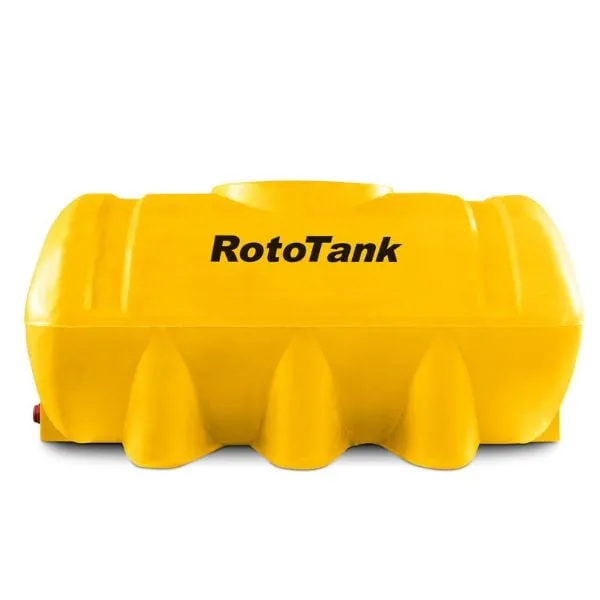

Quick answer: A septic tank treats sewage and lets the liquid soak away into the ground, so it only suits plots with good soil and no sewer connection. A conservancy tank is a sealed holding tank that must be pumped out by a tanker. Septic tanks cost more to install but are cheaper to run. Your municipality decides which one you may use, so get approval first.
What is the difference between a septic tank and a conservancy tank?
A septic tank separates solids from liquid. Bacteria digest part of the solids, and the liquid flows out to a soakaway (also called a French drain), where the soil does the final treatment. JOJO’s septic guide notes that septic tanks handle black water only, while conservancy tanks take black and grey water.
A conservancy tank stores everything and treats nothing. When it fills, a municipal or private tanker pumps it out and takes it to a treatment works. It needs road access for the truck and a routine of pump-outs.
| Feature | Septic tank + soakaway | Conservancy tank |
|---|---|---|
| What it does | Settles solids, releases liquid to soil | Holds all sewage until emptied |
| Needs good soil | Yes, percolation test required | No |
| Running cost | Low, periodic sludge removal | High, regular tanker visits |
| Tanker access | Occasional | Essential |
| Water supply | Reliable supply needed | Any, but volume drives pump-outs |
| Typical use | Rural homes, farms, lodges | Tight plots, poor soil, high water table |
What are the rules in South Africa?
Rules are set by the municipality, so they differ from town to town. As a worked reference, the City of Cape Town’s published specification allows septic tanks only where conditions are ideal: suitable soil, a plot of at least 900 m2 and a reliable water supply. Every septic tank must discharge to a soakaway, and properties must connect to the public sewer and close the septic system once one is built nearby.
The same City specification allows a conservancy tank only if the City Engineer considers a sewer connection impracticable and the City can reach the tank to empty it. It also says new systems need Council approval before use and that only Council-approved prefabricated tanks may be used.
Treat those as an example, not a national rule. Before you buy, ask your local municipality for its septic and conservancy tank specification, whether you need a building plan approval and who is allowed to empty the tank.
How big should the tank be for my household?
Size by the number of people and bedrooms. The Cape Town specification sets a minimum of 1,700 litres for a dwelling of up to 6 rooms and adds 200 litres per additional room beyond that. It also lists design sewage flows for dwellings: 700 L/day for 2 bedrooms, 900 for 3, 1,100 for 4 and 1,400 for 5.
JOJO’s guide gives a simple range for households:
| People | JOJO suggested septic tank volume |
|---|---|
| 2 to 4 | 1,250 L |
| 4 to 6 | 1,750 L |
| 4 to 7 | 2,200 L |
| 4 to 9 | 2,500 L |
For a conservancy tank, the Cape Town specification asks for at least 5,400 litres or two days of maximum flow, whichever is bigger, built in multiples of 5,400 litres.
How does a soakaway work, and what is a percolation test?
The soakaway is a pit or trench of stone, brick or slotted pipe that lets effluent seep into the soil. It fails if the ground will not drain, so the first job is a percolation test. In the Cape Town method you dig a test hole, fill it with water, hold it full for at least 4 hours, then time how fast the level drops over 30 minutes. Soil that drains slower than 30 minutes is not suitable.
The same specification keeps the soakaway at least 3 m from buildings and boundaries, with the water table at least 1 m below the distribution pipes. It must not pollute any spring, stream or well. Keep it well away from your own borehole and ask your municipality for a distance.
Worked example: a four-bedroom home with six people
A family of six lives in a four-bedroom house on a 1,500 m2 plot with a sandy-loam soil that passed a percolation test.
- Design flow: the Cape Town table gives 1,100 L/day for a four-bedroom dwelling.
- Septic tank: a tank in the 1,750 L class fits the 4-to-6-person range and meets the 1,700 L minimum. It holds more than one day of design flow, as required.
- Conservancy alternative: two days of 1,100 L is 2,200 L, but the 5,400 L minimum applies. At a design flow of 1,100 L/day, that tank would fill in about five days, so a tanker is needed every week or so.
Real use is often lower than the design flow, but a conservancy tank still becomes a recurring bill, which is why a septic tank is the better choice wherever the soil allows it.
How much does a septic system cost?
Prices below are Kamano prices, VAT included. See all septic tanks and fittings.
For the family above, the 1,750 L tank is R6,026. Add a few lengths of slotted pipe at R252 each, solid pipe at R196, fittings and a starter tablet. Excavation, stone, labour and any municipal fees are extra, and we do not supply installation.
Delivery is by Kamano’s own trucks to all 9 provinces in 1 to 3 business days. Fees by order weight, VAT included, are R550 up to 30 kg, R950 up to 60 kg and R1,450 up to 100 kg. Over 100 kg is quoted, which will apply to most tanks. Orders of R20,000 or more get free delivery with coupon code KH027, which does not work below R20,000. See our Johannesburg delivery page for details. Payment is by EFT, and for quotes visit our quote page.
How do I maintain a septic tank?
Keep out anything that does not break down: wet wipes, nappies, sanitary products, cooking fat and strong bleach or disinfectant in large amounts. JOJO notes that septic systems rely on natural biodegradation, so use septic-friendly cleaners.
Have the sludge level checked regularly and emptied when it builds up. Do not drive over the tank or soakaway, and keep trees with aggressive roots away. Conservancy tank owners should book the tanker before the tank is full, but remember that some municipalities ask you not to book until it is. Overstrand Municipality, for example, asks for at least three working days notice.
For the tanker side, municipalities and contractors use vacuum units. Our upcoming honey sucker and vacuum tanker guide covers sizes, and you can browse honey suckers now. A 650 L honey sucker skid unit is R19,145.70.
Buying from outside South Africa?
Kamano’s standard delivery covers South Africa only. Buyers in Botswana, Zimbabwe, Mozambique, Eswatini and Lesotho should contact Kamano before ordering to discuss cross-border options. Call or WhatsApp +27 73 679 0837 or email sales@kamanoindustrial.co.za.
Sources
- Specifications: septic tanks, soakaways and conservancy tanks (City of Cape Town)
- The A to Z of septic tanks (JOJO)
- How much does it cost to empty your septic tank? (Overstrand Municipality, April 2024)
Frequently asked questions
Is a septic tank cheaper than a conservancy tank?
A septic tank usually costs more to install because it needs a soakaway, but it is much cheaper to run. A conservancy tank is a sealed holder that needs regular tanker pump-outs, and those visits add up over the years, especially for larger households.
Do I need municipal approval for a septic tank?
Almost always. Municipalities set their own specifications, and some, like the City of Cape Town, require approval before a new system is used and allow only approved prefabricated tanks. Check with your local council before you buy or dig.
What size septic tank do I need for a family of six?
A tank of about 1,750 litres suits four to six people according to JOJO’s household sizing guide, and Cape Town’s rules set a 1,700 litre minimum for a dwelling of up to six rooms. Check your municipality, as local rules may require more.
How does a percolation test work?
You dig a test hole, fill it with water and keep it full for at least four hours, then time how fast the level drops over 30 minutes. In the Cape Town method, soil that drains slower than 30 minutes is not suitable for a soakaway.