
Quick answer: A cow can drink around 68 litres a day in heat of about 32 degrees C, and a bull around 78 litres. Multiply by herd size, then add storage for three or more days and troughs that refill quickly. A solar borehole pump feeding a reservoir and gravity-fed troughs keeps stock watered when Eskom, diesel or labour fail. Test your water, because bad quality hurts livestock too.
How much water does livestock need per day?
Farmer’s Weekly gives cattle figures at about 32 degrees C: roughly 48 L a day for a young animal of about 270 kg, 68 L for a 410 kg cow and 78 L for a 725 kg bull. Lactating cows can need much more, and hot spells on concentrate feed push the numbers up again. A North American extension factsheet uses about 55 L a day for a cow-calf pair and 75 to 95 L for dairy cows.
Plan on the higher end in summer and in drought, when animals are stressed and feed is dry. Sheep and goats drink far less per head, but for a flock the total still adds up, so measure your own animals rather than trusting a rule of thumb.
Why is drought planning urgent in 2026?
Drought has hit livestock farmers hard this year. Arab News reported that farmers in the Western Cape have lost cattle and that the drought has also affected parts of the Eastern Cape and Northern Cape, with dams drying up and grazing gone. The same report says government declared a national emergency in February 2026.
The lesson for every farmer, from Limpopo to the Karoo, is that you need your own water that does not depend on a single dam, a municipal main or the grid.
What size trough do I need?
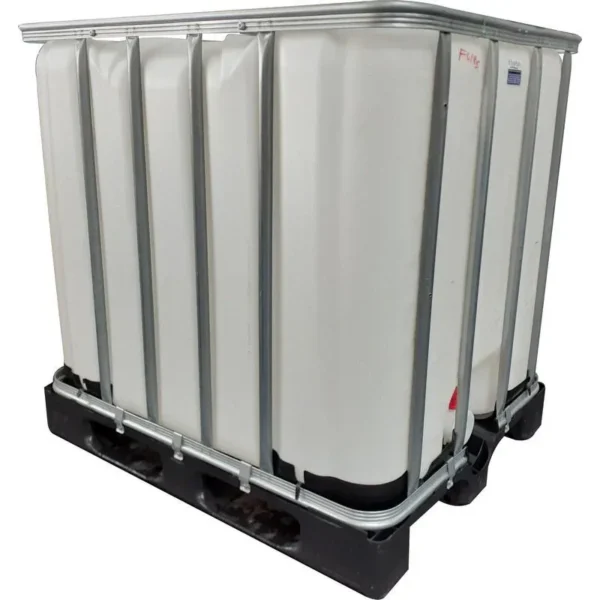
Troughs have two jobs: hold enough water for peak drinking and refill quickly. Farmer’s Weekly recommends a cattle-type trough of 400 L or more rather than a 150 L sheep-type trough. A large camp of around 100 ha should have at least two watering points, one at each end, because more points mean shorter walks and less crowding.
The North American factsheet suggests a minimum trough size of one quarter of the herd’s daily need, plus 15 to 20% extra, and a pump that refills the trough within an hour.
| Herd (cattle at 68 L/day) | Daily need | 3 days of storage | Minimum trough volume (1/4 of daily) |
|---|---|---|---|
| 10 cows | 680 L | 2,040 L | 170 L |
| 30 cows | 2,040 L | 6,120 L | 510 L |
| 60 cows | 4,080 L | 12,240 L | 1,020 L |
| 100 cows | 6,800 L | 20,400 L | 1,700 L |
Use troughs of at least 400 L even for small herds, and split large volumes across several troughs.
How much storage do I need for drought?
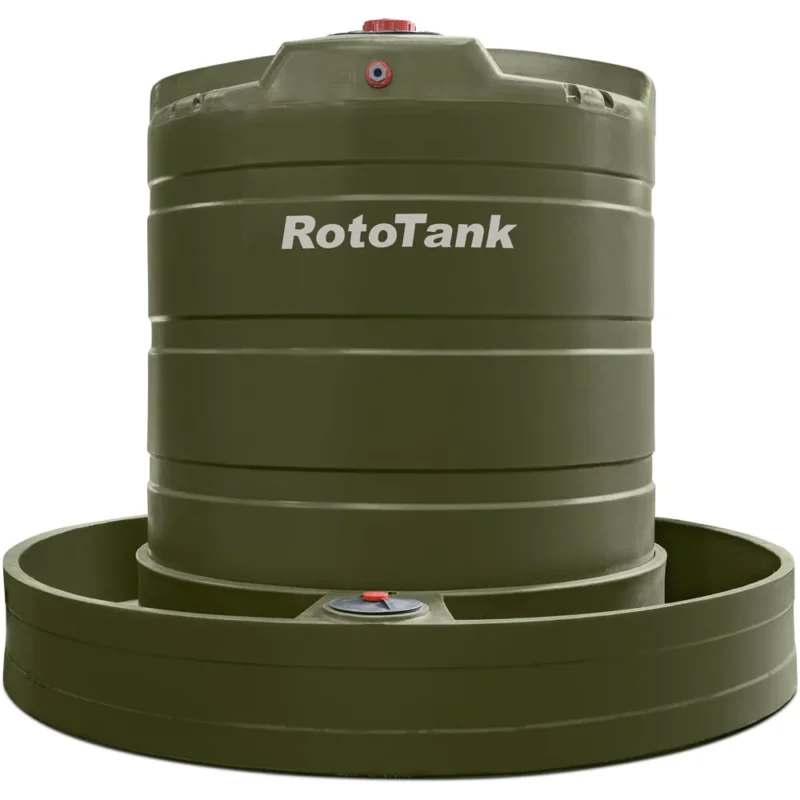
The factsheet advises storage for about three days, either as a reservoir, a very large trough or battery charge, so cloudy days do not leave animals dry. Farmer’s Weekly adds that open-veld herds should have a reservoir over 20,000 L or equivalent tank capacity, and that levels should not drop below 50%. If they often do, you need more storage.
A float valve keeps troughs topped up from the reservoir by gravity, so the pump works only during daylight and the animals drink day and night.
Why use a solar pump for livestock?
A solar pump has no fuel bill, no load-shedding risk and few moving parts. It runs when the sun shines, which is also when animals drink most. The factsheet notes that direct-drive systems (panel to pump) need more panel wattage to cover cloudy days and nights, while a battery system stores energy but adds battery cost and maintenance. With a reservoir, you can skip batteries and store water instead of power.
Choose the pump by borehole depth, yield and the lift to your reservoir. Our solar borehole pump guide covers sizing, panels, DC versus hybrid pumps and payback.
Worked example: 60 cattle in Limpopo
A farmer in the Waterberg runs 60 cows in two camps. Water comes from one borehole. Summer drinking is about 68 L a cow.
- Daily need: 60 x 68 = 4,080 L.
- Three days of storage: 12,240 L, so two 7,000 L reservoirs (14,000 L) give a small buffer.
- Troughs: one trough in each camp. Two 800 L troughs (1,600 L) easily exceed the quarter-of-daily-need guide of about 1,020 L.
- Pump: a solar borehole pump kit matched to the borehole depth and a flow that fills the reservoir in a few sun hours.
Using current Kamano prices, a 1.1 kW 110 V DC solar borehole pump kit rated to 98 m head is R7,648, two 7,000 L livestock water reservoirs are R35,714 (2 x R17,857) and two 800 L livestock troughs are R7,408 (2 x R3,704). That totals R50,770 for the core equipment. Solar panels, mounting, cabling, piping and installation are extra, so confirm what your pump kit needs before you order.
How much does a livestock watering system cost?
Prices below are Kamano prices, VAT included. See the bins and troughs category and the solar pumps category.
| Item | Price |
|---|---|
| 250 L livestock trough with float valve | R1,536 |
| 500 L livestock trough | R2,576 |
| 800 L livestock trough | R3,704 |
| 1,000 L livestock trough with float valve | R6,238 |
| 7,000 L vertical livestock reservoir | R17,857 |
| 4SD2/9 solar borehole pump kit, 0.75 kW 72 V DC, 88 m | R7,128 |
Delivery is by Kamano’s own trucks to all 9 provinces in 1 to 3 business days. Fees by order weight, VAT included, are R550 up to 30 kg, R950 up to 60 kg and R1,450 up to 100 kg, and over 100 kg is quoted. Orders of R20,000 or more get free delivery with coupon code KH027, which does not work below R20,000. See the Polokwane delivery page. Payment is by EFT. Farms, mines and resellers can request bulk pricing at our quote page.
What are the common mistakes with farm watering systems?
The first mistake is sizing for an average day. Size for the hottest week of the year, with the whole herd at the trough and the pump at its slowest on a cloudy morning. The second is a single watering point: when it fails, every animal queues at one trough, the weaker ones go thirsty and the ground around it turns to mud.
The third mistake is putting troughs on soft ground. Set them on gravel or concrete, keep the float valve protected from horns and hooves, and fit a bypass or shut-off so you can clean a trough without draining the reservoir. Walk the pipeline every month, because a small leak under a pipe can drain a reservoir over a week without anyone noticing.
Finally, write down the reservoir level each morning for two weeks after you install the system. That record shows your real daily use, which is usually different from the textbook number, and tells you whether to add storage before the dry season.
Does water quality matter for stock?
Yes. Farmer’s Weekly advises testing water that is discoloured, silty or very salty, and checking for high nitrate or acidic water if cattle do not improve on good supplements. Clean troughs and tanks regularly, because algae and plant matter can build up toxins. Shade your reservoir and keep troughs under cover where you can.
Buying from outside South Africa?
Kamano’s standard delivery covers South Africa only. Buyers in Botswana, Zimbabwe, Namibia, Mozambique, Eswatini and Lesotho should contact Kamano before ordering to discuss cross-border options. Call or WhatsApp +27 73 679 0837 or email sales@kamanoindustrial.co.za.
Sources
- How to provide enough water for your herd (Farmer’s Weekly)
- Solar powered pumping systems for livestock watering (NSFA factsheet)
- In South Africa’s affluent Western Cape, farmers lose cattle to drought (Arab News)
Frequently asked questions
How much water does a cow drink per day?
Farmer’s Weekly puts a 410 kg cow at about 68 litres a day at around 32 degrees C, a young animal at about 48 litres and a bull at about 78 litres. Lactating cows and hot weather on concentrate feed can push this higher.
What size livestock water trough do I need?
Use a cattle-type trough of at least 400 litres. As a guide, the trough should hold about a quarter of the herd’s daily need, and the pump or reservoir should refill it within an hour. Large camps need at least two watering points.
How many days of water storage do livestock need?
Plan for at least three days of storage so cloudy days or pump faults do not leave animals dry. Farmer’s Weekly advises keeping reservoirs above 50% and adding capacity if they drop below that often. Open-veld herds may need 20,000 litres or more.
Are solar pumps good for livestock watering?
Yes. Solar pumps have no fuel bill and no grid dependence, and they run when animals drink most. Pair the pump with a reservoir and float-valve troughs so water is stored for nights and overcast days instead of paying for batteries.