

Quick answer: Match the bowser to your daily diesel use and your power source. A 210 L drum bowser suits a small farm or workshop, a 600 to 1,000 L unit suits most farms and contractors, and 2,000 L twin-IBC set-ups suit larger sites. Choose a 12V pump if the bowser moves around, a 220V pump if it stays near mains power, and always fit a filter and a flowmeter. Check the road rules before you travel full.
What size diesel bowser do I need?
Start with how much diesel you burn between refills, not with the biggest tank you can afford. A bowser that is too small means a trip to the depot every few days. One that is too big ties up cash in fuel and is heavy to move when full.
As a rule of thumb, aim for a bowser that holds at least one to two weeks of your busy-season use. A tractor, a bakkie and a generator on a small farm will rarely need more than 600 to 1,000 L at a time. Earthmoving contractors and mines usually think in thousands of litres.
| Bowser size | Typical user | Typical set-up |
|---|---|---|
| 210 L drum | Small farm, workshop, bakkie service | Hand pump or 12V pump |
| 600 L | Small contractor, smallholding | 12V pump, filter, extinguisher |
| 1,000 L | Most farms, plant hire, small fleets | 12V or 220V pump, flowmeter |
| 2,000 L (twin IBC) | Bigger farms, civil sites | 12V pump, filter, extinguisher |
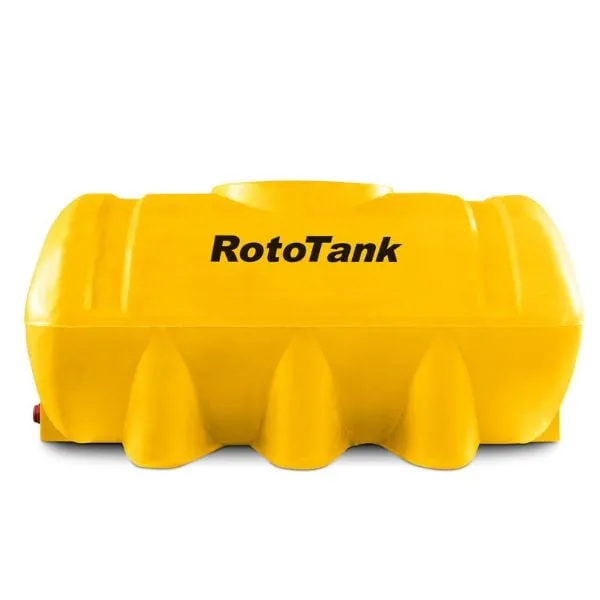
| 500 to 2,000 L horizontal fixed | Yards and depots | Fixed to a frame or pad, 12V pump |
Trailer, skid or bakkie bowser: which is better?
The right format depends on where the diesel needs to go.
- Skid or frame bowsers sit on a bakkie load bed or a flatbed. They are the most flexible, because you can lift them off with a forklift or tractor loader.
- Trailer bowsers are towed to the machine. They suit fields and construction sites where the equipment cannot easily drive to a central point.
- Fixed bowsers stay in the yard. They work like a small private filling point and are the most stable choice for daily refuelling.
If the bowser will be carried on a bakkie, mind the legal and weight limits discussed below. Diesel weighs roughly 0.83 kg per litre, so a full 1,000 L unit carries more than 800 kg of fuel before you count the tank and pump.
12V, 220V or hand pump: how do I choose?
The pump decides how fast you refuel and where you can use the bowser.
- 12V pumps run from a vehicle or tractor battery, so they work anywhere. Typical flow is around 40 to 70 L/min. Many are rated for intermittent use, so give the motor a rest between long fills (a supplier guide from Australia suggests roughly 20 to 30 minutes on, then an equal rest).
- 220V pumps need mains or a generator. Flow rates are often higher and the motor is usually built for longer runs, which suits a depot or workshop with regular power.
- Hand pumps need no power at all. They are slow (about 18 L/min on a typical rotary drum pump), but they cannot fail in a power cut.
For a mobile farm bowser, 12V is the usual answer. For a yard bowser next to a plug, 220V keeps your vehicle batteries out of the equation.
Why fit a filter and a flowmeter?
Dirty or wet diesel is a common cause of blocked fuel filters and injector wear. A water-absorbing or dirt-trap filter on the outlet catches contamination before it reaches your machine. It costs far less than an injector repair.
A flowmeter shows exactly what each machine drew. That matters for cost control, for tax records and for spotting theft. We cover this in detail in our guide to fuel flowmeters and stopping diesel theft. Browse the flowmeter range if you want to add one to an existing set-up.
What do the road rules say about carrying diesel?
This is where people get caught. A report quoting the Fuels Industry Association says a private motorist may carry up to 1,000 litres of diesel under an exemption from the dangerous goods provisions of the National Road Traffic Act. Portable containers are limited to 60 litres per vehicle under the same exemptions, and the 60 litre figure is referenced in SANS 10231. Commercial transport has different obligations.
So a full 1,000 L bowser sits right at the private limit, and a 2,000 L unit is above it. If you move diesel as part of a business, confirm your obligations with your traffic authority or insurer before loading. Rules on how much you may store on site are set by municipal by-laws, covered in our guide to diesel storage regulations in South Africa.
Worked example: a 600 ha grain farm in Limpopo
Assume a farm runs two tractors with 400 L tanks, and uses about 5,000 L in a busy planting month (an assumption for this example, not a statistic). A 1,000 L bowser with a 12V pump at 40 L/min fills one empty 400 L tractor tank in 10 minutes.
The farmer parks the bowser at the field edge, so tractors never leave the work. Two refills of the bowser per week cover the month. With a flowmeter, each fill is logged against a machine. Without one, the farmer would be guessing.
How much should I budget for a diesel bowser in 2026?
Prices below are Kamano’s current prices, VAT included. They will move with steel, pump and rand costs, so check the product page.
Why budget for the better-equipped unit? The price gap between a basic 1000 L bowser and one with a flowmeter is only about R820. Diesel is expensive: BusinessTech reported that the wholesale 50 ppm diesel price rose by R2.84 a litre on 7 October 2026, so even small losses add up fast.
Browse the full diesel bowser range or the fuel transfer pumps if you want to build your own set-up. Pair a bowser with a diesel storage tank if you want a bulk supply at the yard.
How is a bowser delivered?
Kamano delivers by its own trucks to all 9 provinces in 1 to 3 business days. Fees are by order weight, VAT included: R550 up to 30 kg, R950 up to 60 kg and R1,450 up to 100 kg. A bowser will usually weigh more than 100 kg, so it is quoted. Orders of R20,000 or more qualify for free delivery with coupon code KH027. See the Polokwane delivery page for an example, and use the quote form for trade and bulk orders. Payment is by EFT.
Buying from outside South Africa?
Kamano’s standard delivery covers South Africa only. Buyers in Botswana, Zimbabwe, Namibia, Mozambique, Eswatini and Lesotho should contact Kamano before ordering to discuss cross-border options. Call or WhatsApp +27 73 679 0837 or email sales@kamanoindustrial.co.za.
Sources
- TopAuto: what the law says about bulk buying fuel in South Africa
- BusinessTech: official fuel price changes, October 2026
- AIMS Industrial: diesel transfer pump guide
- Industrial Fluid Solutions: diesel theft in South Africa
Frequently asked questions
What size diesel bowser should I buy for a farm?
Most farms do well with a 600 to 1,000 L bowser, because it holds one to two weeks of diesel for a few machines. Smaller operations can use a 210 L drum bowser. Larger farms and civil sites may prefer 2,000 L twin-IBC units or a fixed horizontal bowser in the yard.
Is a 12V or 220V diesel bowser pump better?
A 12V pump suits a mobile bowser because it runs off a vehicle battery anywhere on the farm. A 220V pump suits a fixed yard bowser near mains power, with higher flow and longer run times. If power cuts are common, a hand pump is a reliable backup.
Can I carry a diesel bowser on my bakkie?
A report quoting the Fuels Industry Association says private motorists can carry up to 1,000 litres of diesel under an exemption. Business transport has different rules. Check the load limit of your bakkie and confirm your obligations with your traffic authority or insurer first.
Do I need a flowmeter on a diesel bowser?
You do not strictly need one, but it is strongly advised. A flowmeter records every litre dispensed, which helps with cost control and with spotting theft. On a 1000 L Kamano bowser the meter adds roughly R820 to the price compared with the basic unit.